




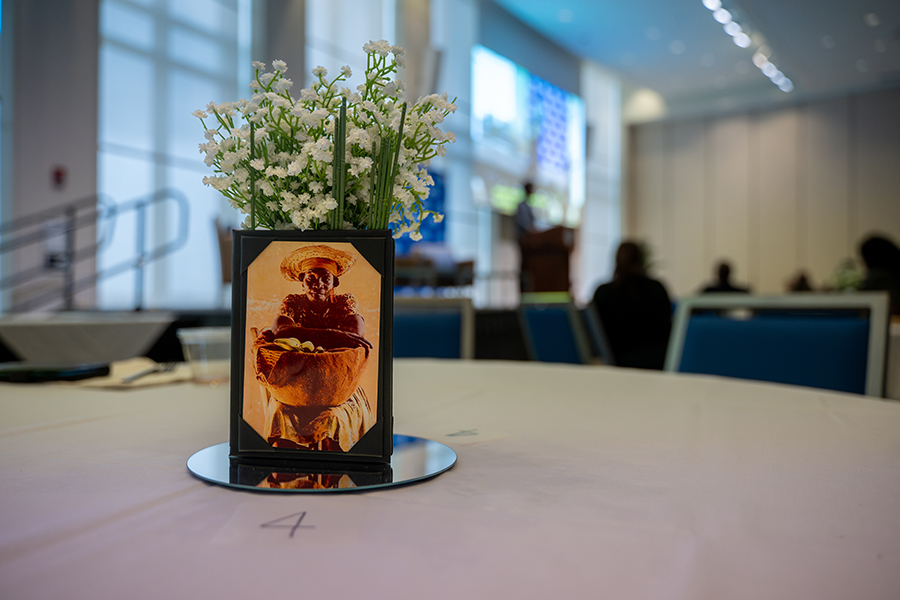
UMass Boston’s Sixth Annual Black Lives Matter Day Honors Black Cultural Resilience in Challenging Times


Across the country, political rollbacks on diversity and inclusion, curriculum bans, and efforts to erase critical race theory represent more than policy disputes. They are direct attacks on how Black people live, create, and thrive. Against this backdrop, UMass Boston’s 2025 theme, “Still We Rise … Black Cultural Resilience in Challenging Times,” invited the community to engage deeply with what Black culture is, how cultural erasure persists, and how emerging technologies, especially artificial intelligence, shape both the threats and the opportunities ahead.
The day opened with a powerful artistic invocation from political science and theatre arts student Deleyah Creese, whose three poems grounded the audience in lineage, memory, and survival. Her performance set the tone for the program: art not as decoration, but as declaration. Musical performances by The Spirituals Ensemble from the Boston Arts Academy and members of the UMass Boston Jazz Trio deepened the energy in the room, reminding attendees that Black cultural expression has always been an anchor during times of upheaval.
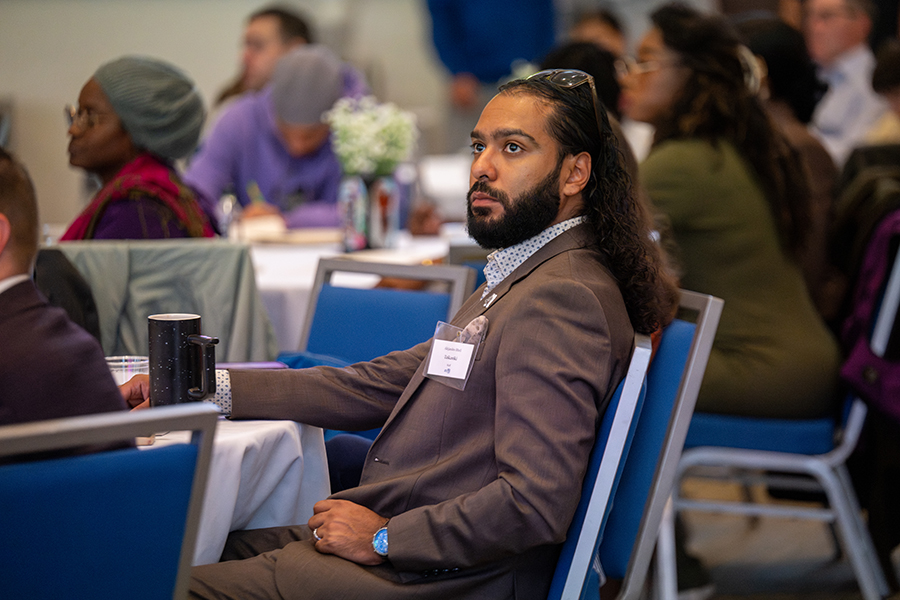
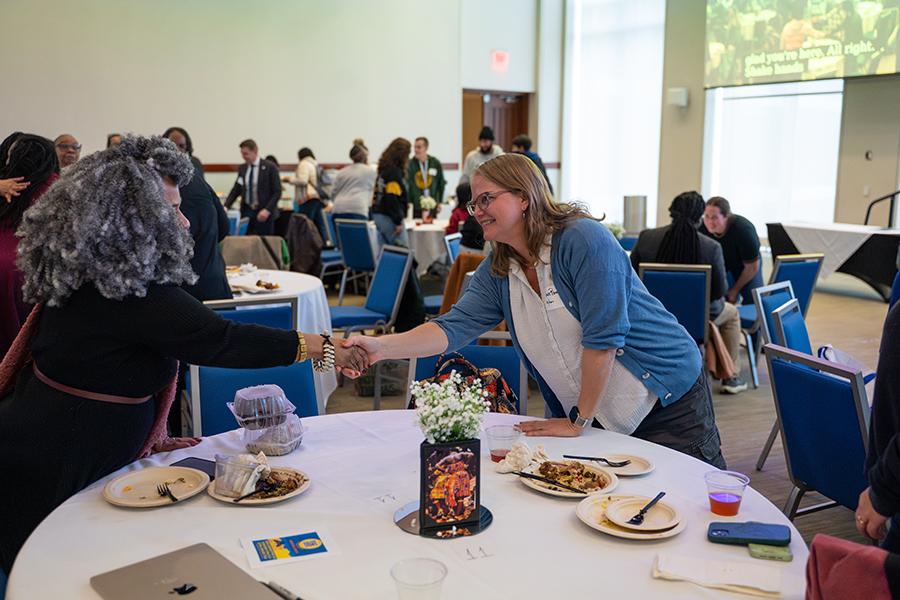
A record number of participants, many of them students, will inherit both the threats and the possibilities ahead. They gathered for a dynamic program that included a panel of artists, organizers, and scholars; remarks from Provost Joseph Berger; a community fair featuring local organizations and campus partners; and a keynote address by Imari K. Paris Jeffries, ‘97, G’99, G’03, PhD’23, president and CEO of Embrace Boston.
In opening remarks, Michael Johnson, special assistant to the chancellor for Black life and the event’s lead organizer, underscored the deep roots of Black cultural expression. “Cultural and artistic expression have been central to the life, health, and well-being of our community… it is undeniable that our artistic and cultural expressions have been central to the American story and American identity,” he said. Yet he noted that even today, acknowledging the truth of Black cultural influence is met with resistance. Dismissing Black cultural contributions as “just DEI,” he explained, is a contemporary form of white supremacy attempting to minimize the depth and impact of Black creativity.
That framing set the stage for the panel discussion moderated by Keyana Parks, assistant professor of English. Panelists included Catherine T. Morris of BAMS Fest, Wil Jones of Ground3D, Jazzmyn Red, artist, educator, and U.S. Ambassador of Hip-Hop and Cultural Exchange, and Nicholas Johnson, founder of Culturally Rooted Reformations. Together, they explored the intersecting threats facing Black culture, from political backlash to algorithmic bias, and the community-rooted responses that continue to rise in resistance.
In many ways, the day echoed Gil Scott-Heron’s warning that “the revolution will not be televised.” True transformation, the speakers argued, happens through the ongoing, intergenerational work of cultural preservation. Black resilience is not passive endurance. It is creation. It is an archive. It is everyday people choosing to tell their own stories rather than letting institutions, governments, or algorithms do it for them. Whether through oral histories, policy-making, or technological innovation, Black communities continue to define themselves in a landscape that often attempts to rewrite or erase their narratives. Protecting culture, panelists affirmed, is itself a revolutionary act.
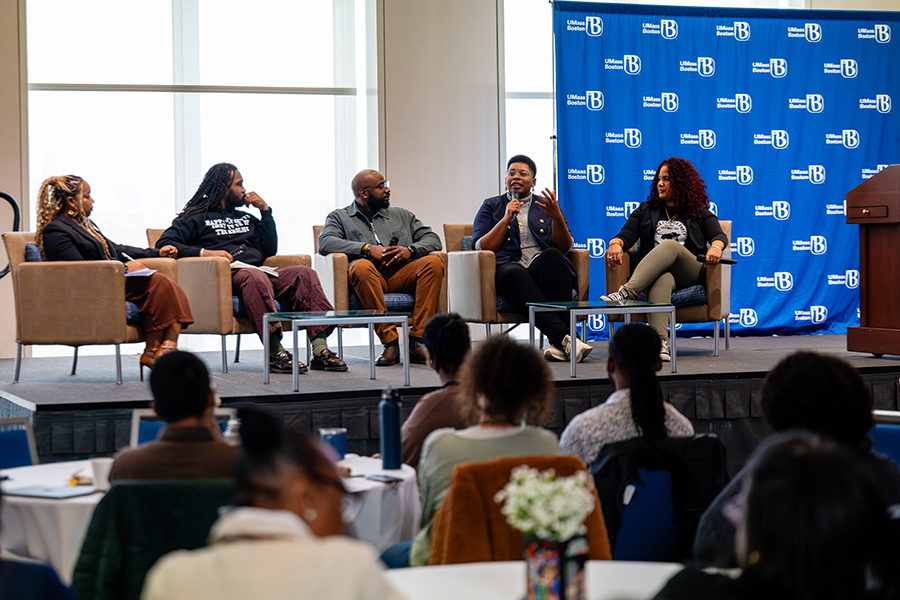
When Jazzmyn Red spoke, the room leaned in. “I think the responsibility of artists is to understand that art is historical preservation,” she said. Art, she explained, carries both harm and joy. “If we don’t talk about what is happening through our art or how it’s affecting our communities, there are other places where it can get lost.” At the same time, she emphasized balance: “Everything cannot always be heavy. We have to find joy. We have to find connection.” Her words crystallized a central lesson of the day: Black cultural resilience is built not only on resistance, but on joy as an intentional practice.
The keynote address by Imari Paris Jeffries expanded this theme through the lens of monuments and public memory. Reflecting on his work with The Embrace monument and broader racial equity efforts across Boston, he urged the audience to reconsider what stories a nation chooses to remember. If future anthropologists evaluated the United States solely through its monuments, he noted, they might conclude it was a nation defined by “war, slavery, and the subjugation of Indigenous people.” “I don’t know about you,” he said, “but I don’t think that that would be the story I would want them to tell about me.” He warned that forces of othering—racism, nativism, xenophobia, anti-Semitism—are expanding, demanding collective action and courage. “There is the work of policy, there is the work of culture… but monuments work in the background. What if we build more monuments about dignity?”
The celebration also recognized students making meaningful contributions to Black and African diaspora communities. Deborah Dauda, Elisa Cabral, Rayaan Ali, and Kashmeel McKoena were honored for their impact in classwork, research, and community engagement.
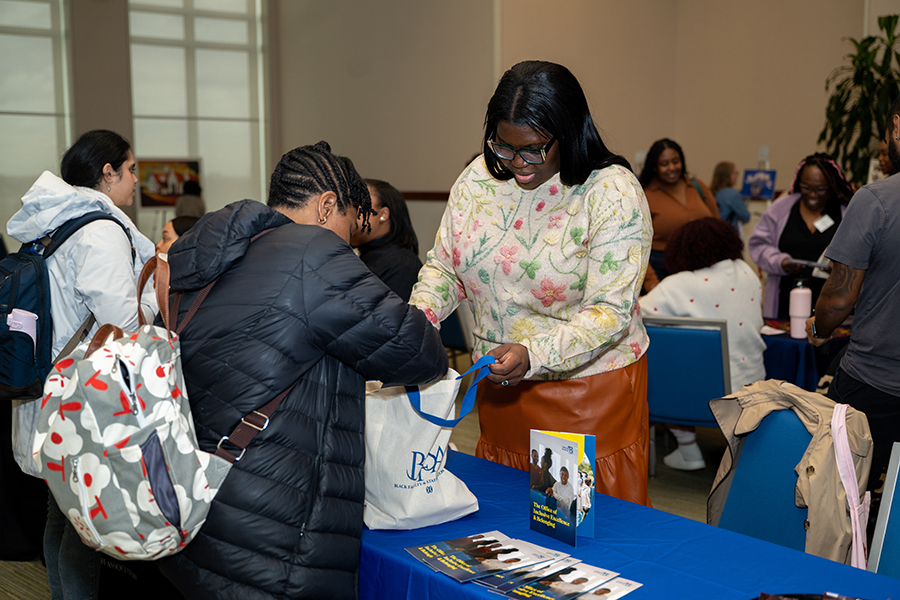
UMass Boston formally established Black Lives Matter Day in 2020, when Chancellor Marcelo Suárez-Orozco designated the first Monday of November as an annual day of recognition. Past themes, Empowerment Through Collective Leading, A Beautiful Resistance, and Black to the Future, reflect the university’s ongoing commitment to celebrating Black life, culture, and thought.
In closing, Provost Berger emphasized the responsibility institutions hold. “We cannot be who we are as a university without putting these recognitions at the forefront of our work,” he said.
Black cultural resilience, as the day affirmed, is not a theme but a living practice, an act of remembrance, a form of resistance, and a blueprint for the futures Black communities continue to imagine and build.
Latest University News
- At the Boston Globe Summit, UMass Boston Faculty, Staff and Students Tell Stories of Making an ImpactLuminaries from art, science, business and politics gathered to give lectures and discussions on this year’s most important issues. UMass Boston was a proud sponsor of this year’s Boston Globe Summit.
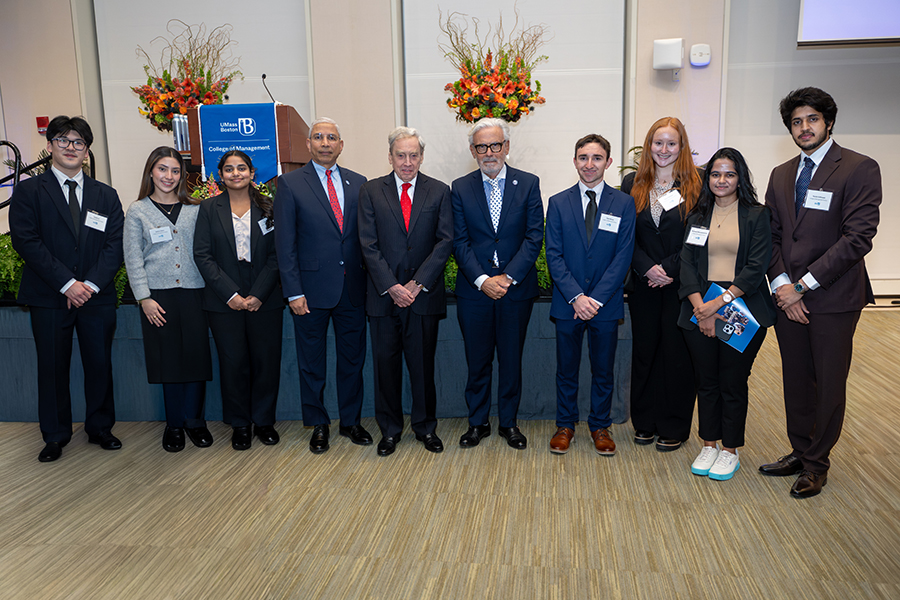
- UMass Boston’s College of Management Celebrates 50 YearsThe UMass Boston College of Management marked a defining milestone as faculty, staff, students, alumni, and university leaders gathered to celebrate the college’s 50th anniversary - five decades of expanding access to high-quality business education.
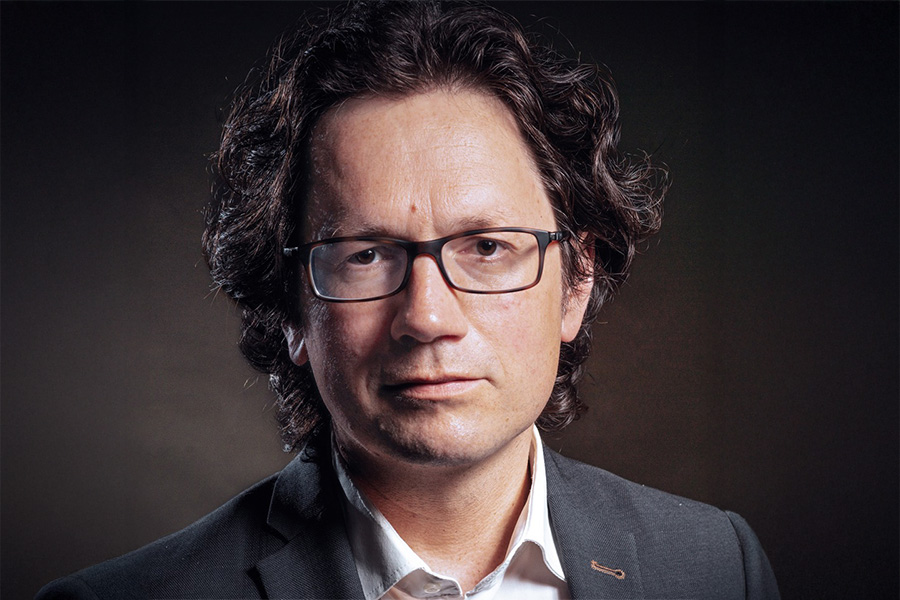
- UMass Boston Marketing Professor Named One of the World’s Most Influential ResearchersProfessor Werner Kunz of the College of Management has been named a Highly Cited Researcher 2025 by Clarivate, recognizing him as one of the world’s most influential researchers.
- Student-Athlete Nathan Rubin Debuts Children’s Book "Chasing a Dream"UMass Boston basketball player and economics major Nathan Rubin has published a children’s book to inspire kids to dream big and work toward achieving their goals.
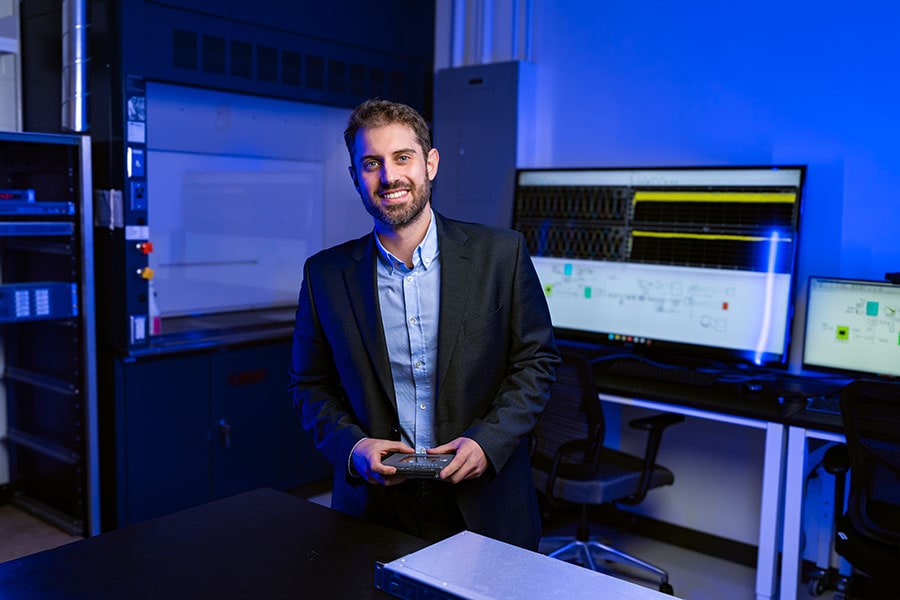
- UMass Boston Researcher Receives Grant to Study Cyberattacks on Power GridsIoannis Zografopoulos, an assistant professor in the Engineering Department of the College of Science and Mathematics at UMass Boston, has been awarded a grant from the National Science Foundation (NSF) to study the cybersecurity of power grids targeted by communications-based cyberattacks.
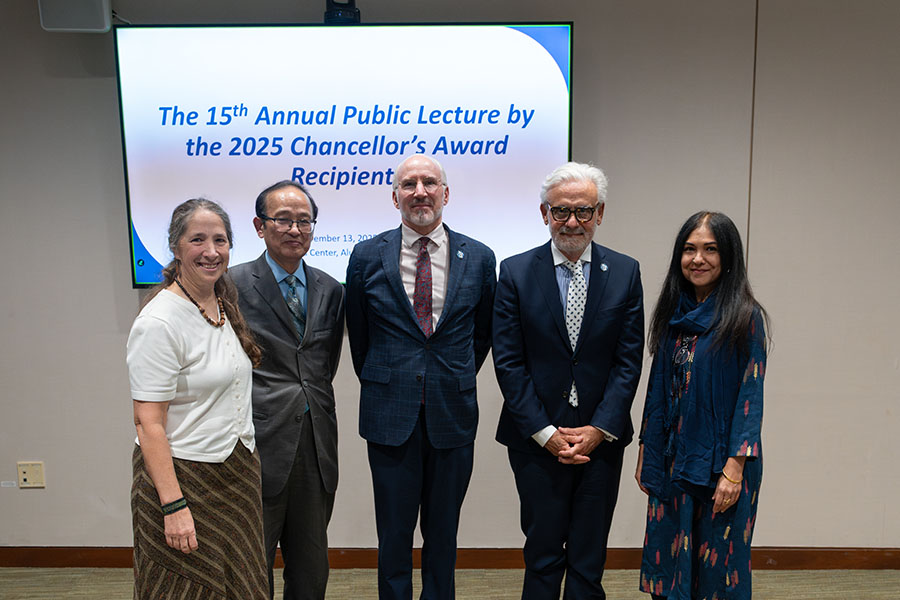
- Recipients of Chancellor’s Distinguished Faculty Award Gather for Annual LecturesOn November 13, three faculty members were recognized for their contributions to scholarship, teaching, and service. This year marks the 15th Chancellor’s Distinguished Faculty Award Lectures, which celebrates these faculty members’ exceptional contributions to their fields and to the UMass Boston community.